
Reval Rebel
Reval Rebel is a narrative action RPG about a craftsman caught in the middle of a war his own hands supply. It is spring 1343 in Reval (present-day Tallinn), days before the St. George's Night Uprising. Every commission comes with someone's hidden purpose: knights, merchants, rebels, spies. Forge it honestly, hide a useful feature, or introduce a flaw. What you make comes back as protection, evidence, betrayal, or a blade at someone's throat.
Can a craftsman remain innocent when every object he makes becomes someone else's instrument of power?
Status: pre-production with a playable Godot 4 prototype. Below is what already runs in the engine and what is planned. The whole game is produced by AI agents under one author's direction.
Source code and documentation on GitHub
Why it is worth playing
- The forge is your lever. You are not the chosen warrior of the uprising but the person who makes its tools. A commission, the customer's hidden purpose, and a few meaningful ways to execute it - that is how the player touches history.
- Objects remember. A spearhead you sabotaged in spring shatters in someone's hand at the siege. A gate chain forged true holds. Consequences surface in named people, districts, patrols, prices, and dialogue, not in a good/evil meter.
- History keeps its rails, people do not. The signal fires, the siege of Reval, Paide, the 1346 sale of Estonia all happen on schedule. You steer the human cost: who lives, who trusts whom, how you are remembered.
- You fight with what you forged. Combat is small and personal: hammer, guard, dodge, one technique. Most gear on you and on your enemies passed through your hands.
A world you can walk into
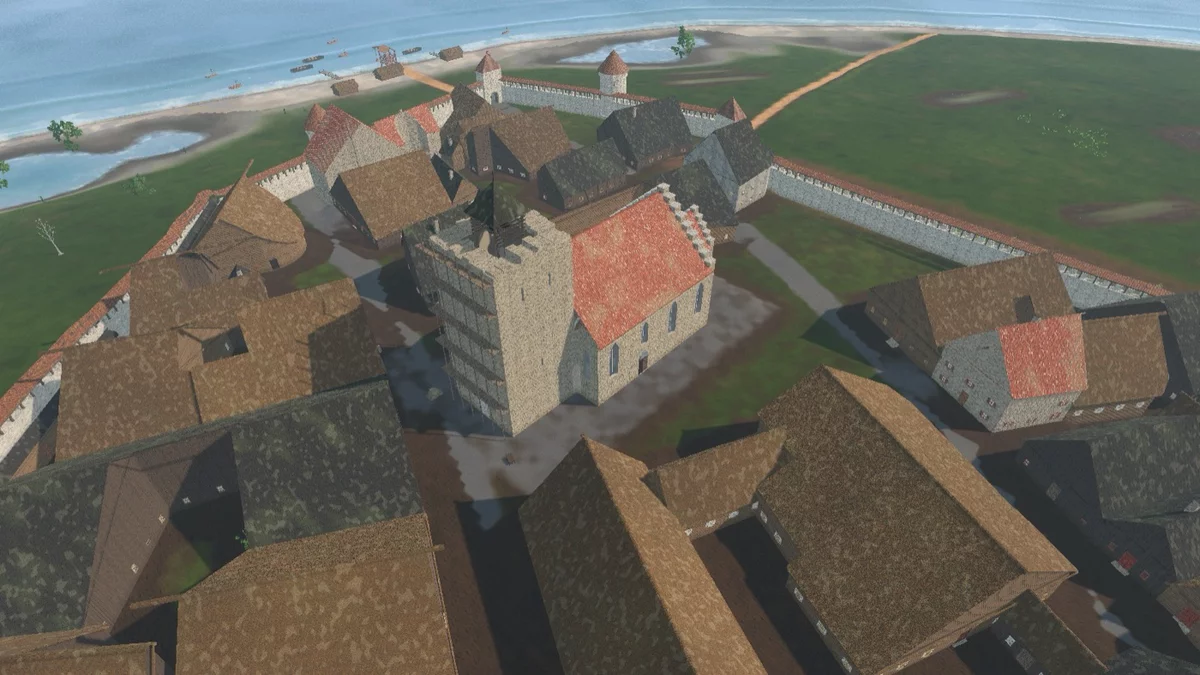
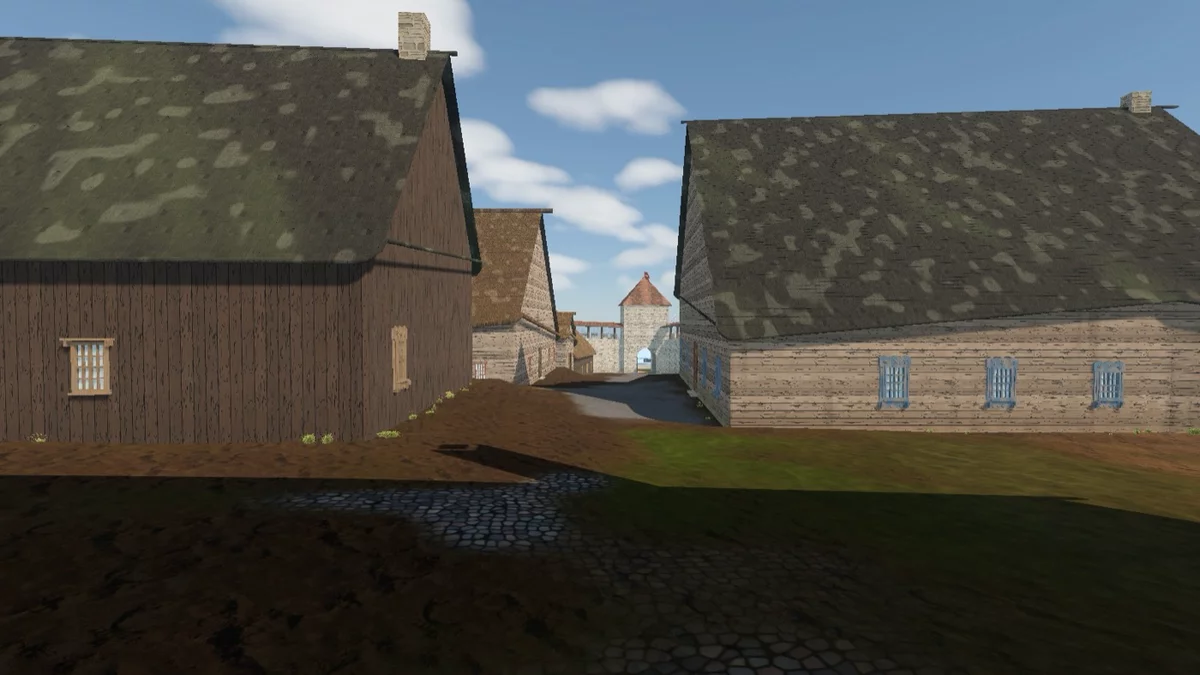
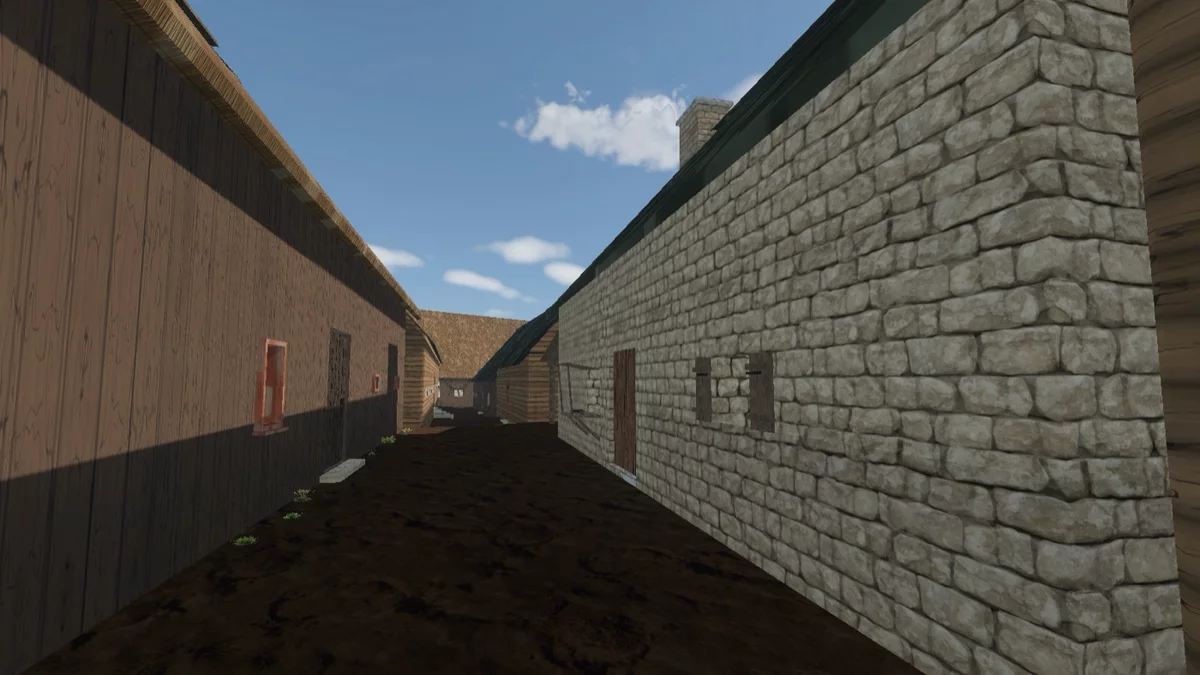
1343 Reval is built from historical evidence: the street plan, the wall and towers, churches reconstructed from sources. The city is seamless - from street to house to yard to the gate and the countryside with no loading screens. Distant places such as the monastery, castles, and islands are reached by an explicit journey.
|
|
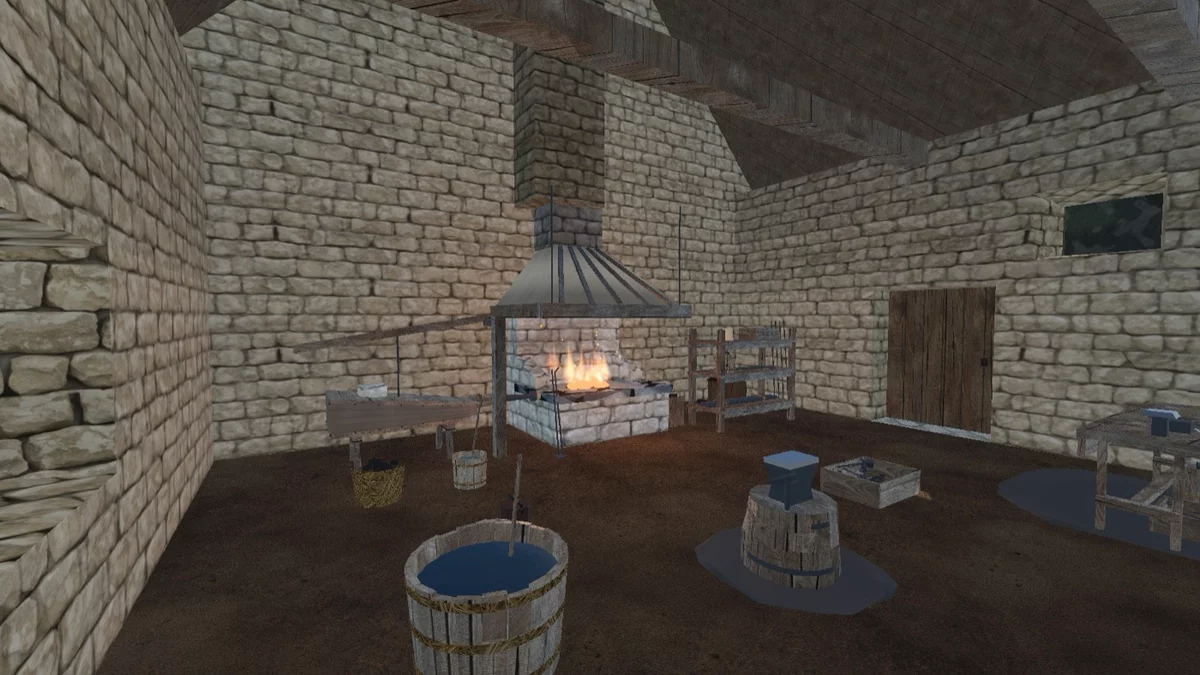
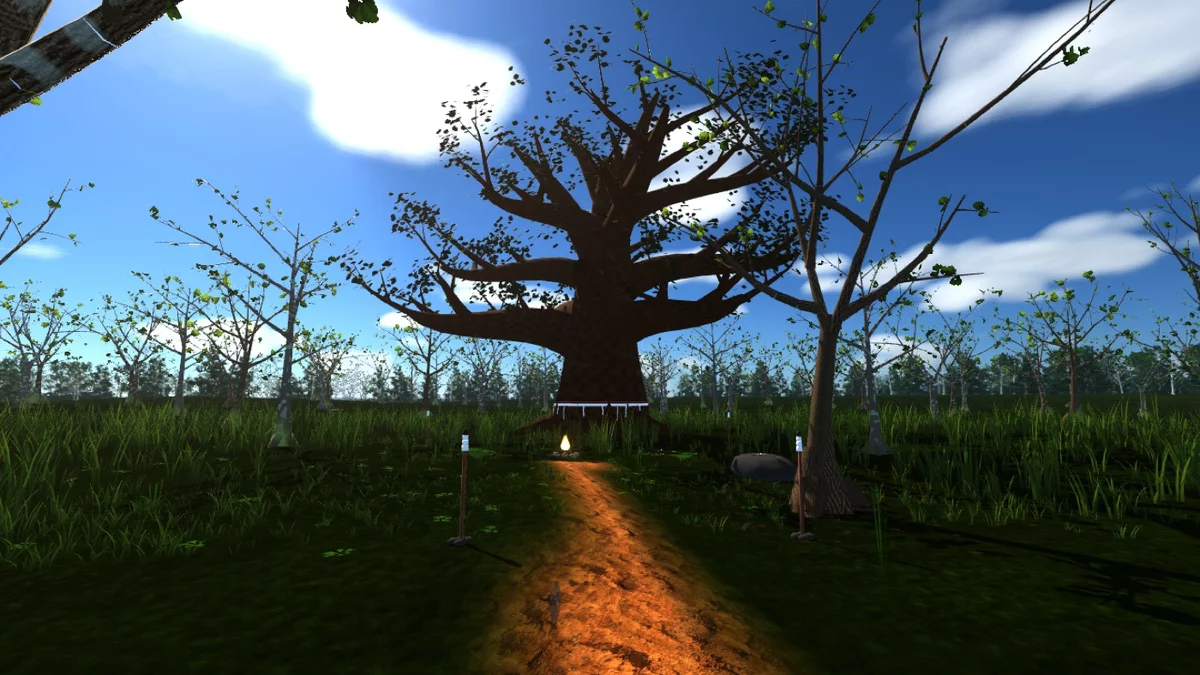
| Pikk street - the road down to the sea gate | Smithy lane - a limestone forge among timber neighbours |
|
|
| The forge bay - hearth, bellows, anvil, quench tub | Sacred grove - the ancient oak beyond the walls |
Every named person, event, and belief carries a confidence label: attested, plausible composite, folklore, or invented. History is never invented silently; where the game departs from sources, the canon records it.
Weather, seasons, and sky - a living climate, not a backdrop
The atmosphere is built as a system, not a skybox. Everything reads one shared state of weather, time of day, season, and wind.
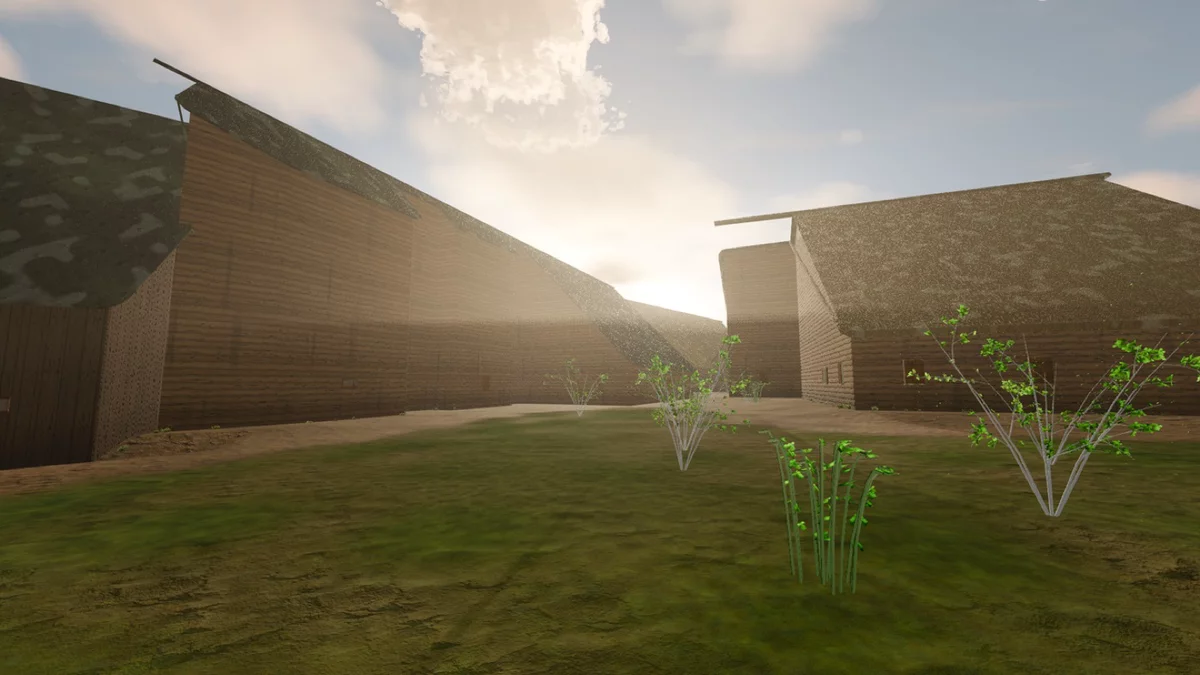
- Clouds as objects. Individual cumulus and storm cells live in the world: they grow, merge, drift with the wind, and cast real shadows over the streets. Local showers fall out of them.
- Storms, lightning, and sunbeams. Rain falls under a specific cloud, not everywhere at once; lightning flashes from a storm cell, sunbeams break through the cloud deck, and a sun shower can leave a rainbow. A reduced-flashing mode exists for sensitive players.
- Fog, haze, and heat mirage. Ground fog at the water, distance haze, and a summer mirage on the horizon.
- A real night sky. Over Reval (59.437 N) you see stars down to magnitude 5 and the Milky Way, and the sun follows the calendar date.
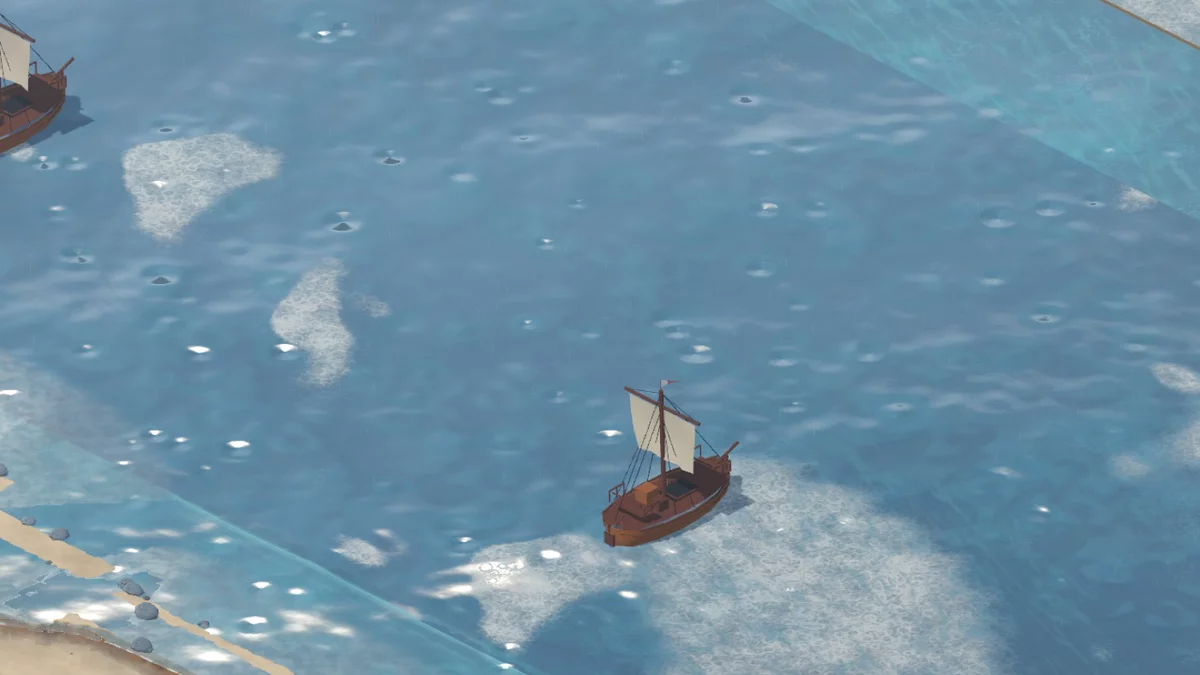
- A physically driven sea. An FFT ocean with whitecaps, foam, shore swash, caustics, and sun glint. Wave crests turn parallel to the shore following Snell's law, so surf looks like surf and not a ribbon running along the beach.
- The ground reacts to weather. Rain fills puddles in hollows and ruts; cobbles stay dark and glossy and mirror the sky. A long dry spell bakes the same basins into cracked clay, and the first rain soaks back into the cracks.
Four seasons
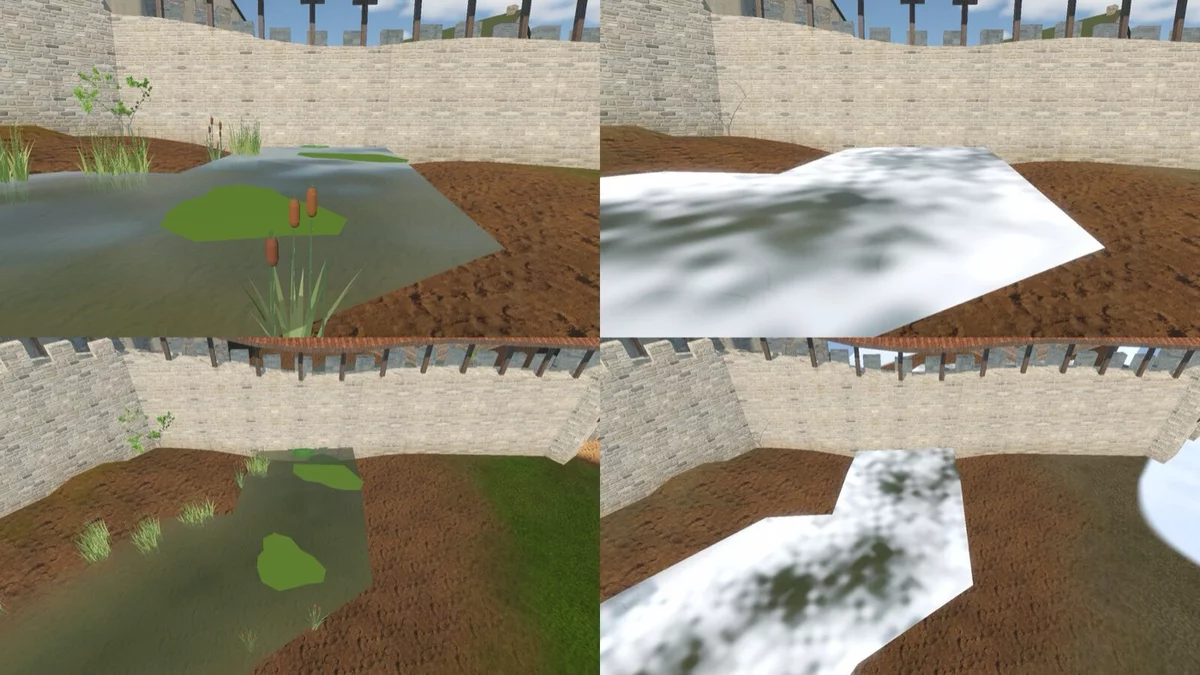
The climate follows Tallinn normals: the coldest day is about -4 C, the warmest about +17 C.
- Spring: buds, blossom, thaw, mud, and puddles.
- Summer: full leaf, fruit, short nights.
- Autumn: yellowing crowns and falling leaves that drift in the wind and lie under the trees.
- Winter: bare trees, fine or heavy snowfall, drifts, ice on puddles, moat, and rivers, icicles under eaves. Deep snow slows walking and footprints stay on it. Citizens dress for the season and chimneys smoke harder.
Living vegetation
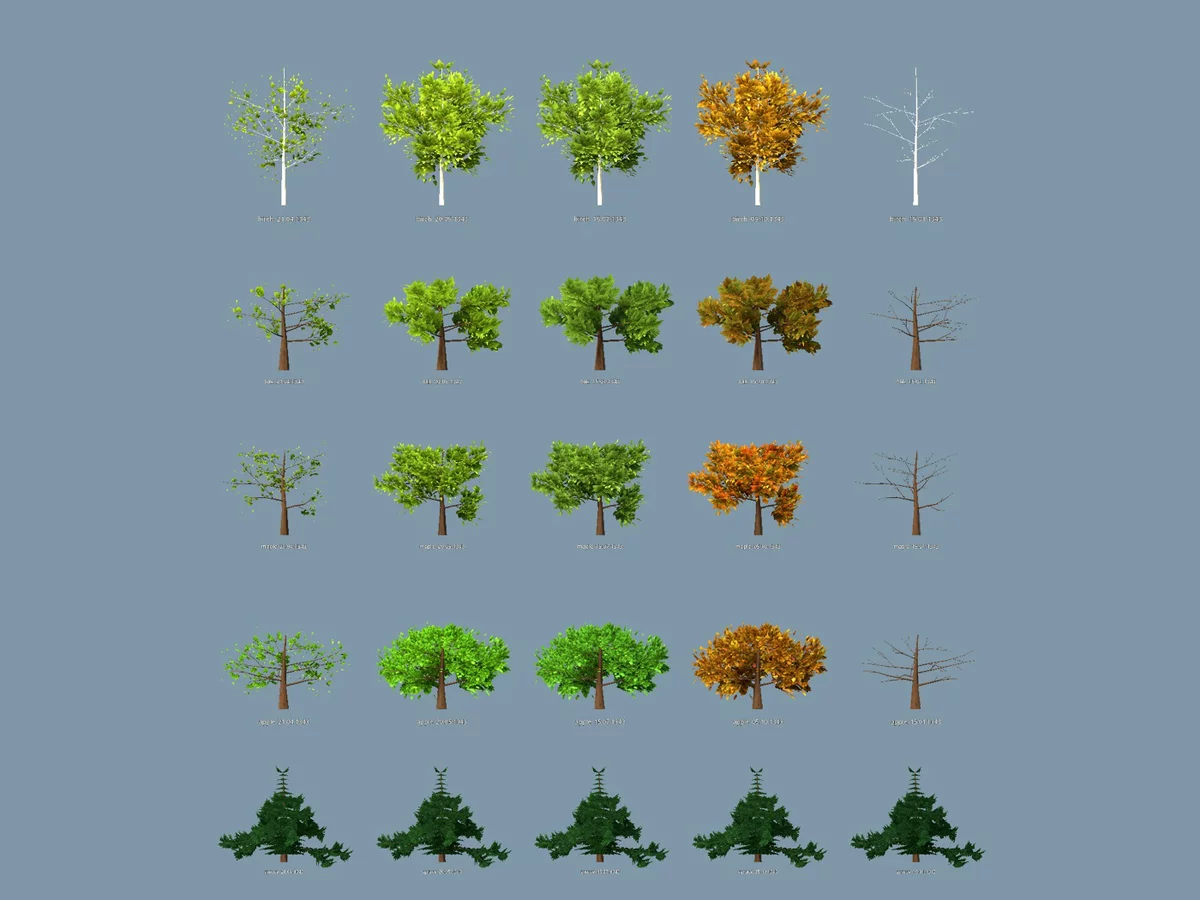
20 procedural tree species with their own silhouettes, a shared wind field where a gust front crosses the grass and then the crowns, individual blades of grass, moss on the north side of trunks, mushrooms in the woods, and wild flowers by month. Plants are placed by ecology: sedge at the water, clear road verges, pine heath on sand.
Factions with no good guys
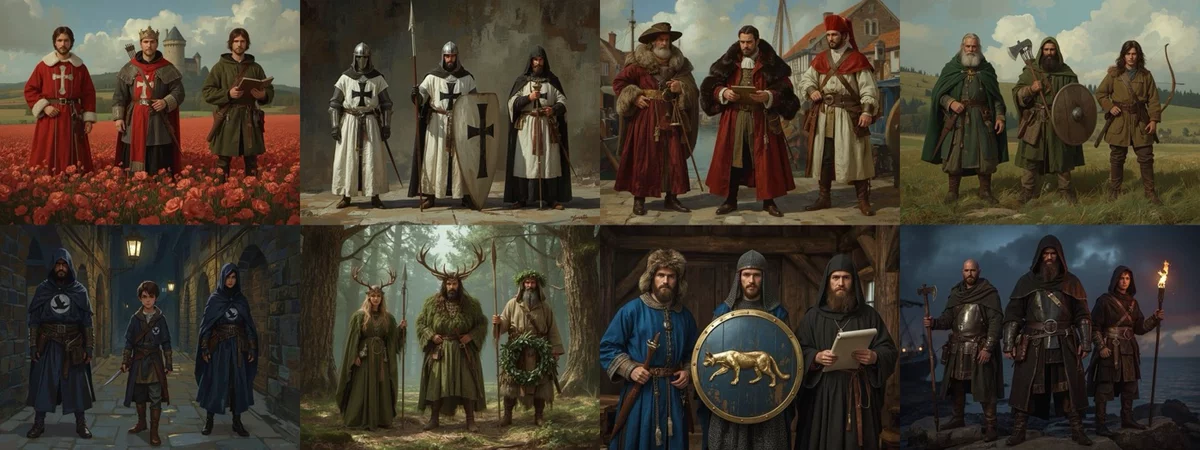
Eight factions, each right about something and dark about something else: the Danish Crown, the Livonian Order, the Hanseatic guilds, the Harju Kings, the Black Cloaks, the Cult of Metsik, the Pskov and Novgorod emissaries, and the Vitalienbrüder. Factions keep a ledger of your concrete deeds, and the city accumulates pressure - Hope and Fear. There is no join-a-team menu; allegiance grows out of play until St. George's Night forces a decision that cannot stay ambiguous.
How a day plays
- By day, take commissions, investigate who benefits, trade, and talk to people whose loyalties are shifting.
- At the forge, finish the work honestly, alter it, or sabotage it. Every choice is written into the object's record.
- By night, face the consequences in compact missions - sabotage, theft, escort, defense, escape - with combat and non-combat routes.
- In the morning, watch people, places, patrols, and supplies react.
- At Hingepuu, tend the hero's inner world, which is both narrative weight and progression.
Three acts
| Act 1 - The Simmering City | Act 2 - The Fire of Rebellion | Act 3 - The Iron Harvest | |
|---|---|---|---|
| When | Spring 1343, up to St. George's Night | April - May 1343 | 1344-1346 |
| Climax | St. George's Night at Viru Gate - Open, Seal, or Break | The Four Kings at Paide | The sale of Estonia, 1346 |
Target length is 15-20 hours, with replay value in branches and consequences, not procedural runs. Endings are families of outcomes for the hero, the forge, the people, and the land.
Built by AI agents
The game is produced end to end by AI agents - code, content, art, documentation - with a human acting as product owner and reviewer. That is a design constraint, and the architecture serves it: maps and quests are schema-validated data, dialogue is authored offline and tested (no runtime LLM), every task closes against a verifiable condition, and every feature is documented. Details are in the repository.