
Robot Actuators Workshop (September 28, 2026)
Visited the Robot Actuators Workshop organized by Sergii Kharagorgiiev (Tallinn Robotics & Computer Vision / autonomia.ee). It took place at Põhjala Tehas / Stuudiomaja - a colorful place: a former factory, a loft with big windows, with a vibe similar to Telliskivi. There were only 6-8 people, so it felt almost like a private session.
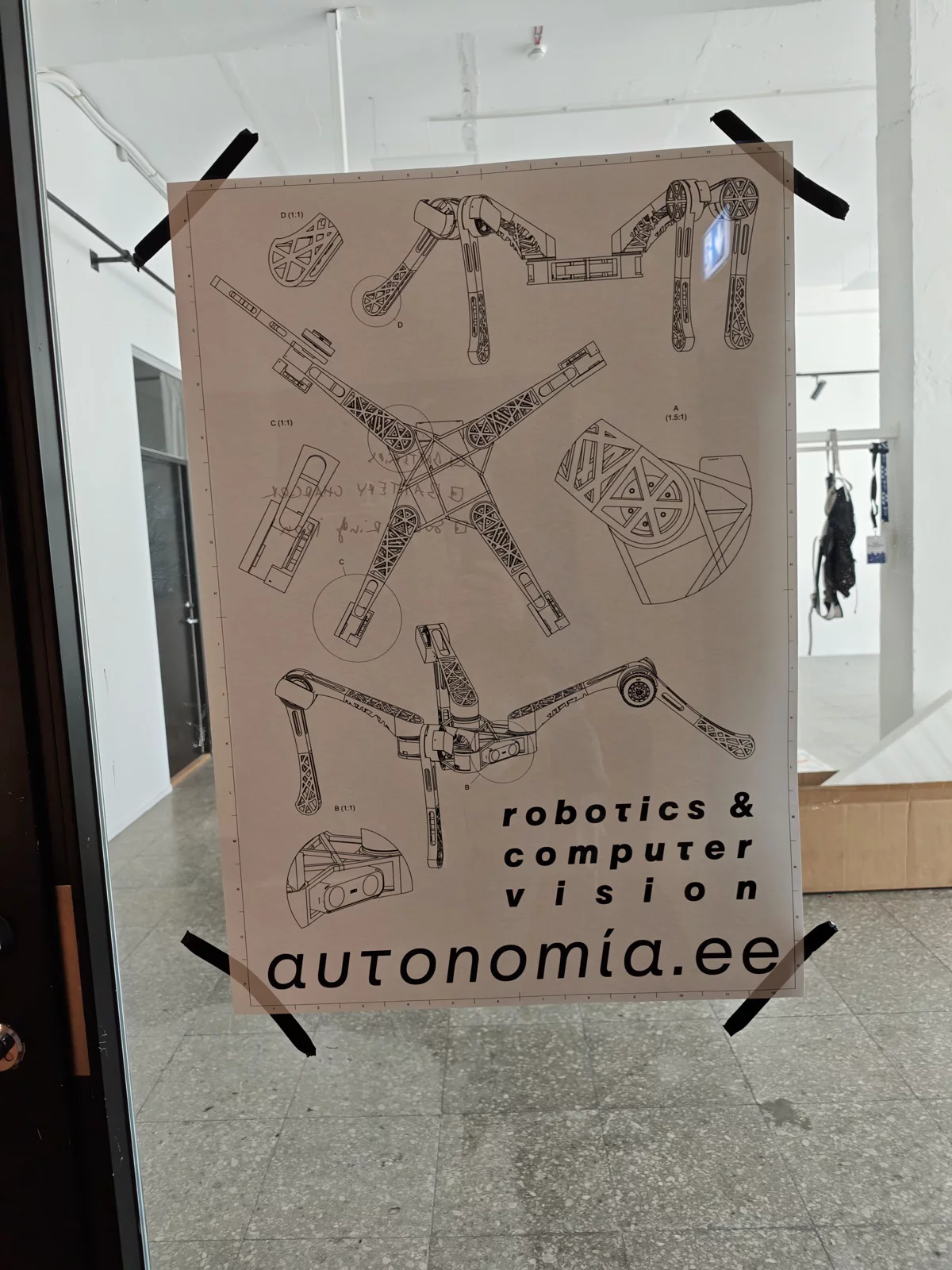
Theory: types of motors
The first part was an overview. Sergii talked about and showed live different types of electric motors for robotics - from tiny RC servos and drone BLDCs to gimbal motors and serious joint actuators - and went through the pros and cons of each. Afterwards I asked an agent to write an overview article on the topic (in Russian): Intro to robotics: motor types.
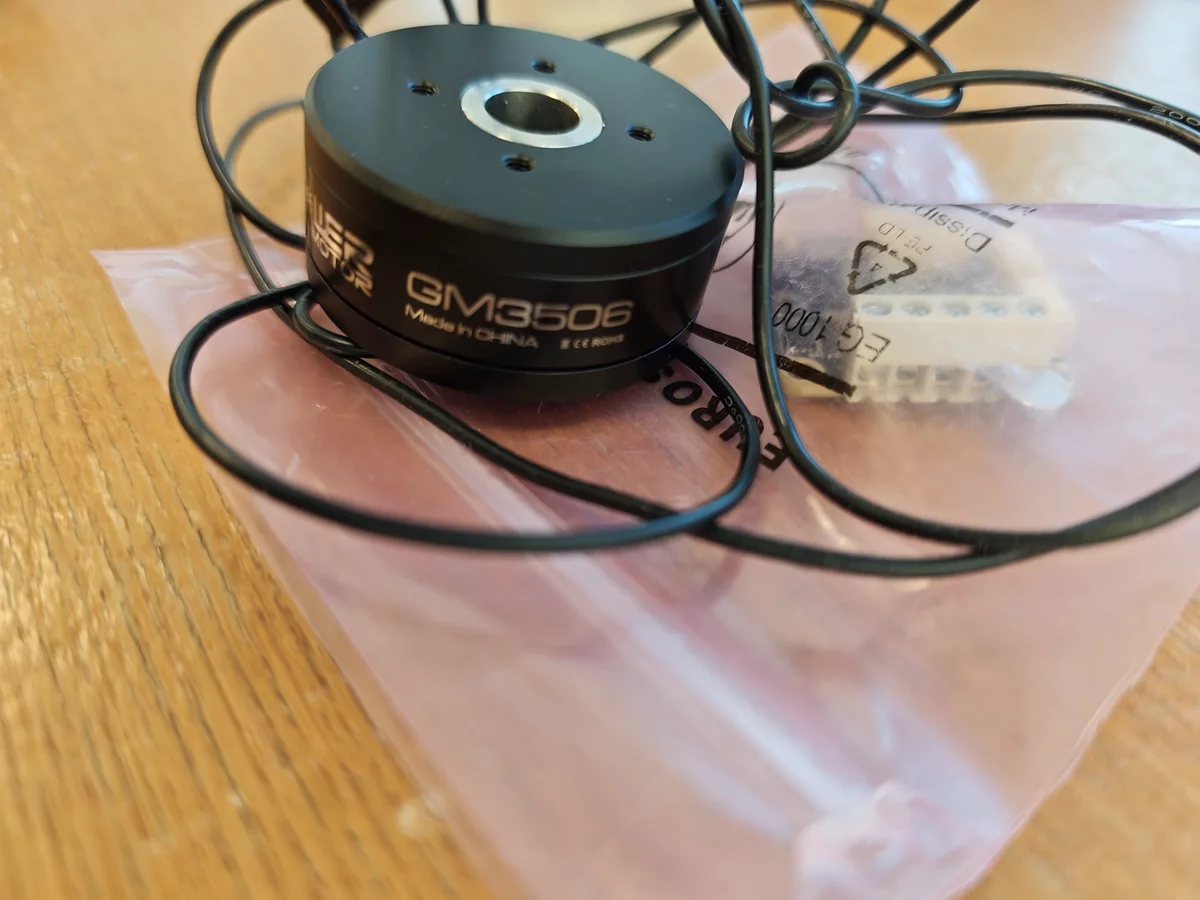
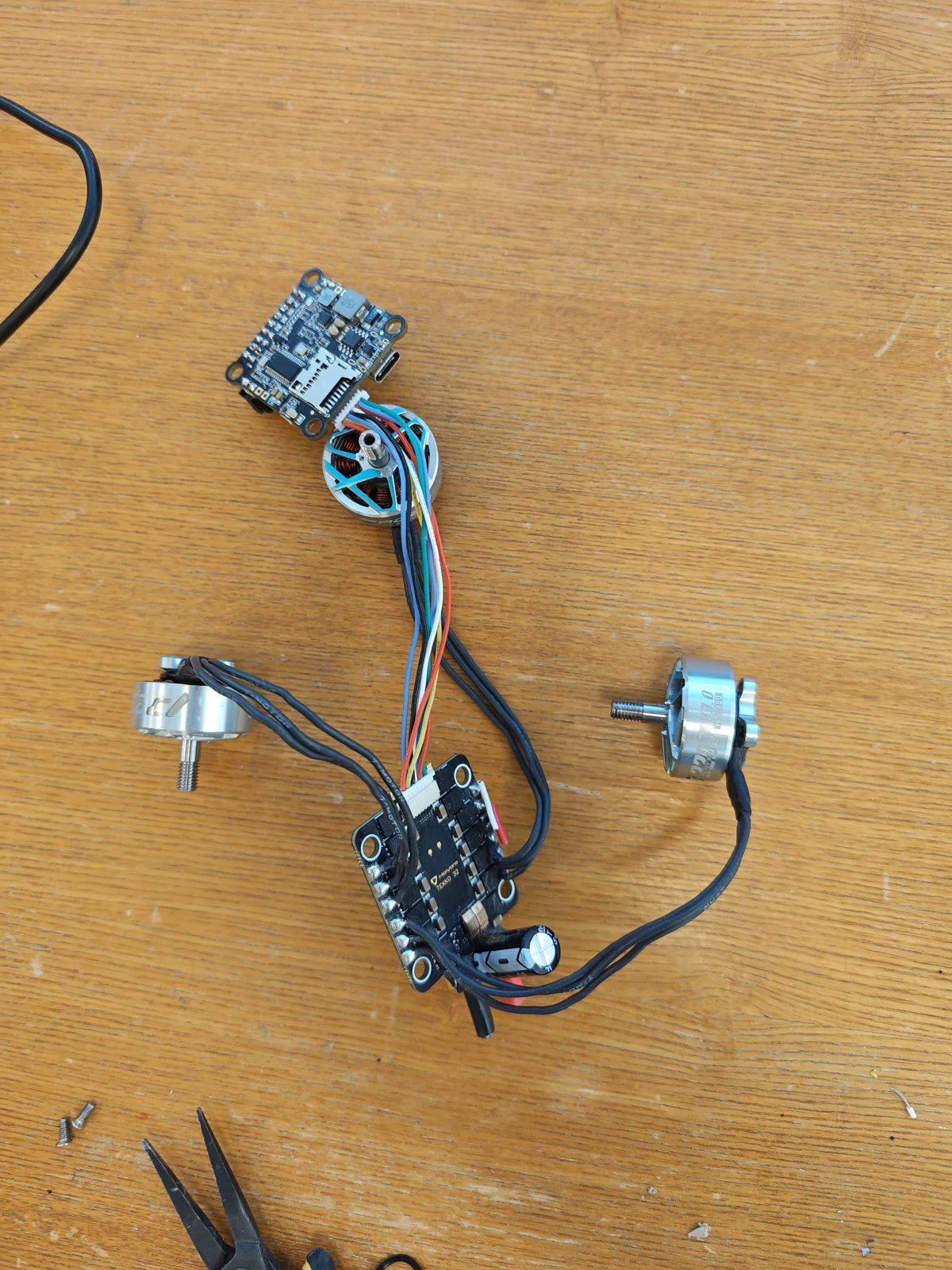
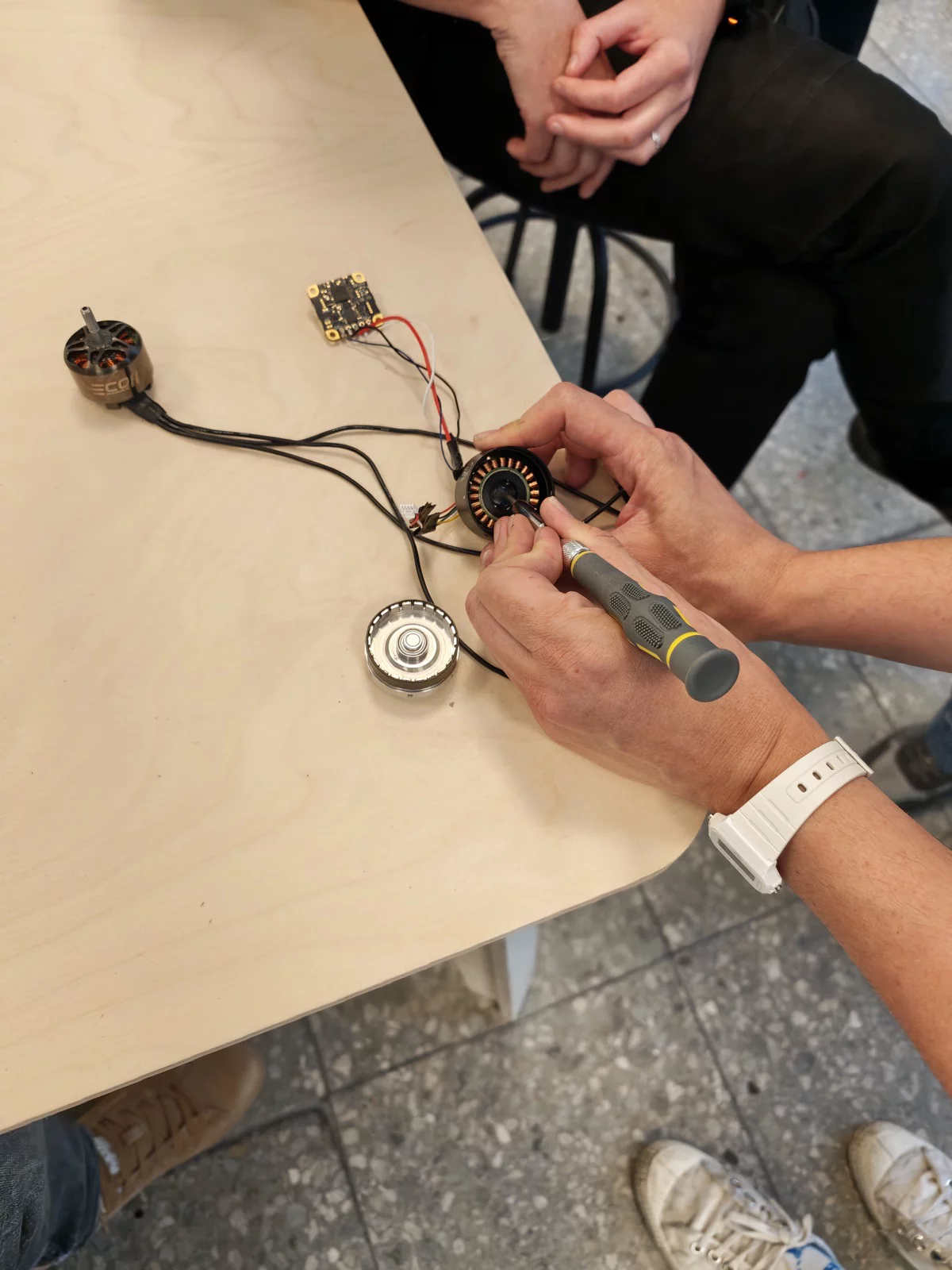
It was clear that Sergii is still in the middle of choosing which motor fits best, balancing price, noise, speed, endurance, and degrees of freedom at the same time. There is no perfect option, you always trade something off.
The lab
The fun part - the lab has a teleoperation robot. On one side there are controls for human hands, on the other side robot arms that mirror the movements and can pick things up. The gripper is simple - it just squeezes the object - but "move your hand, the robot moves its own" looks impressive.
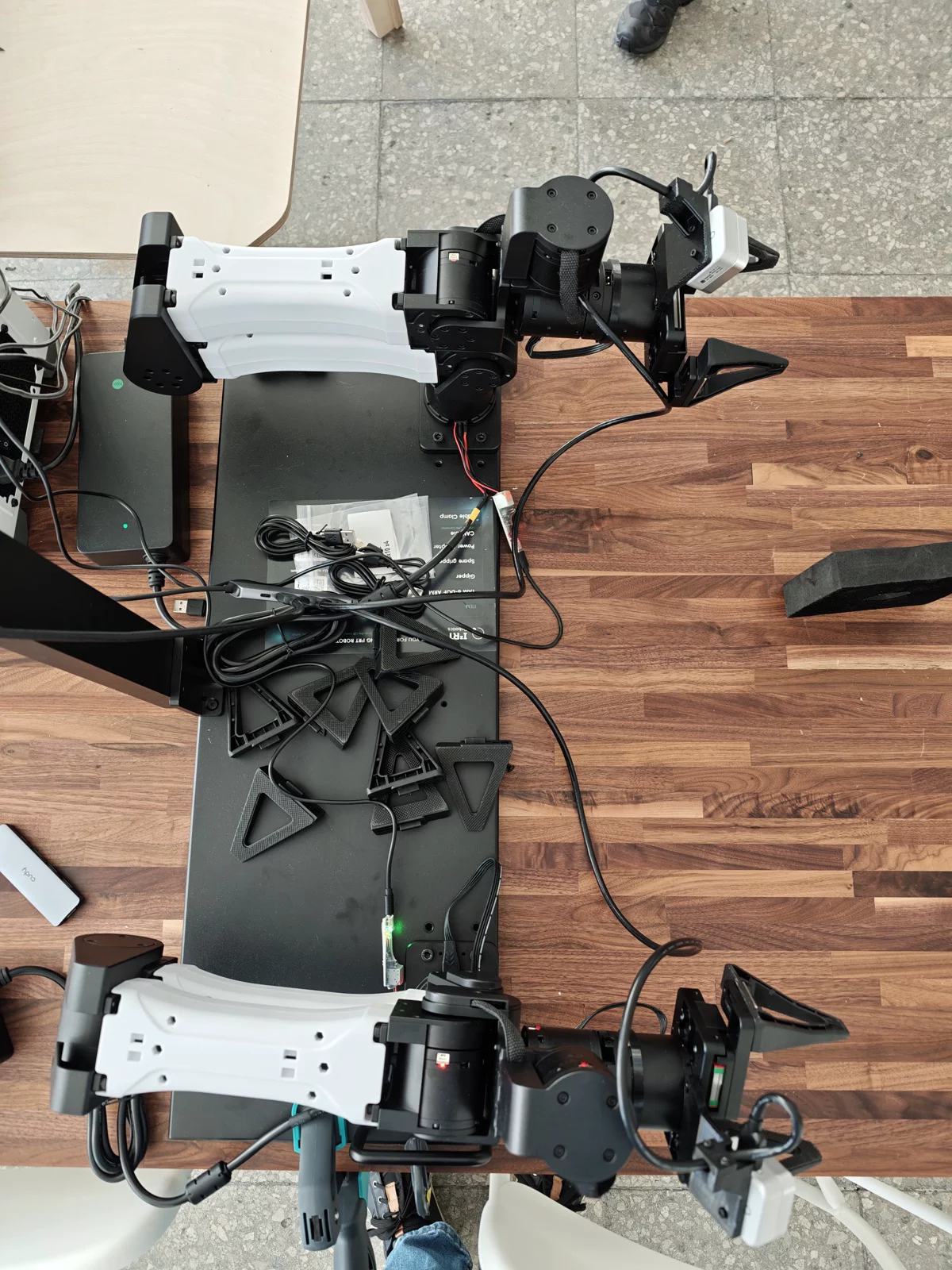
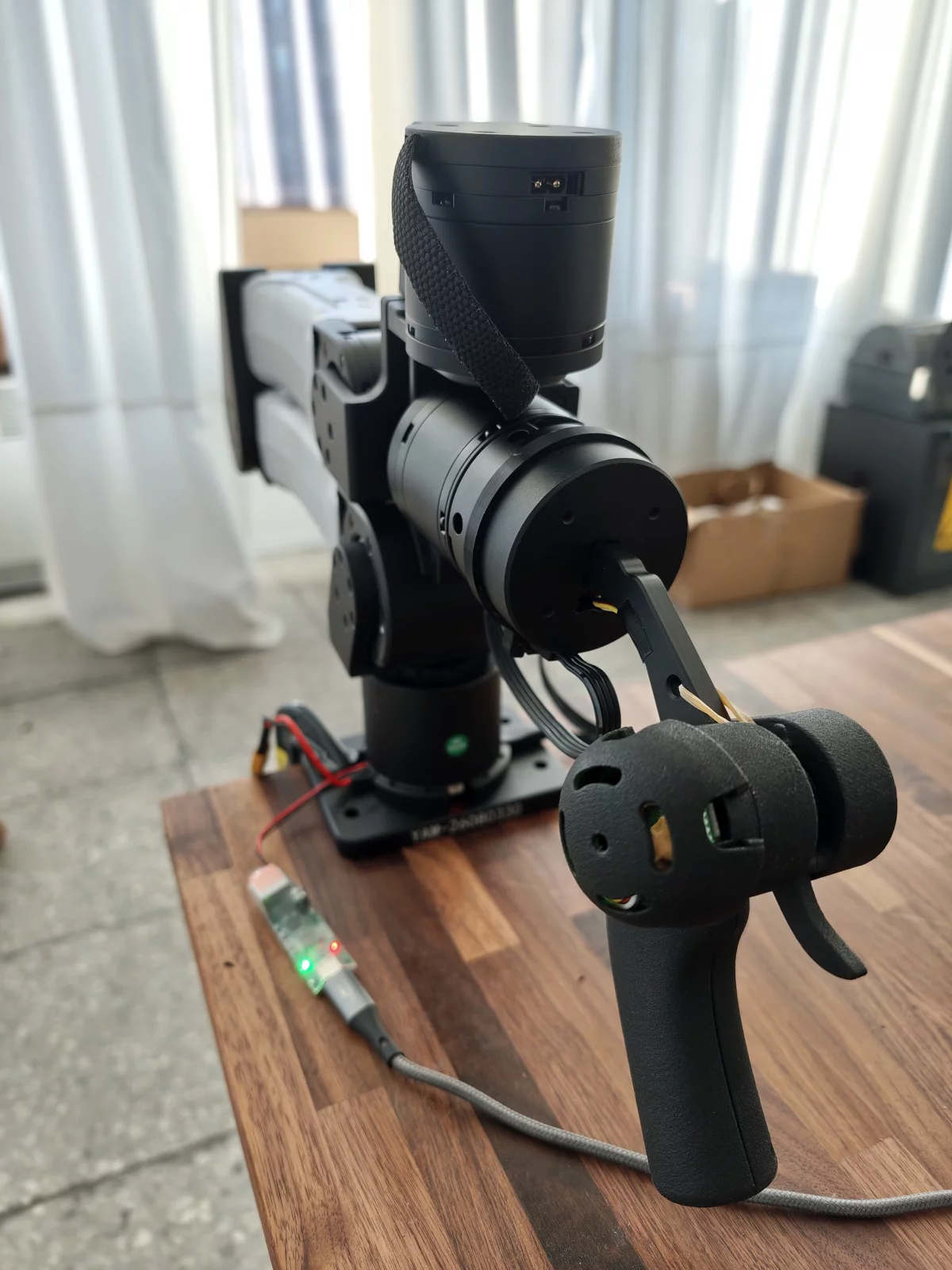
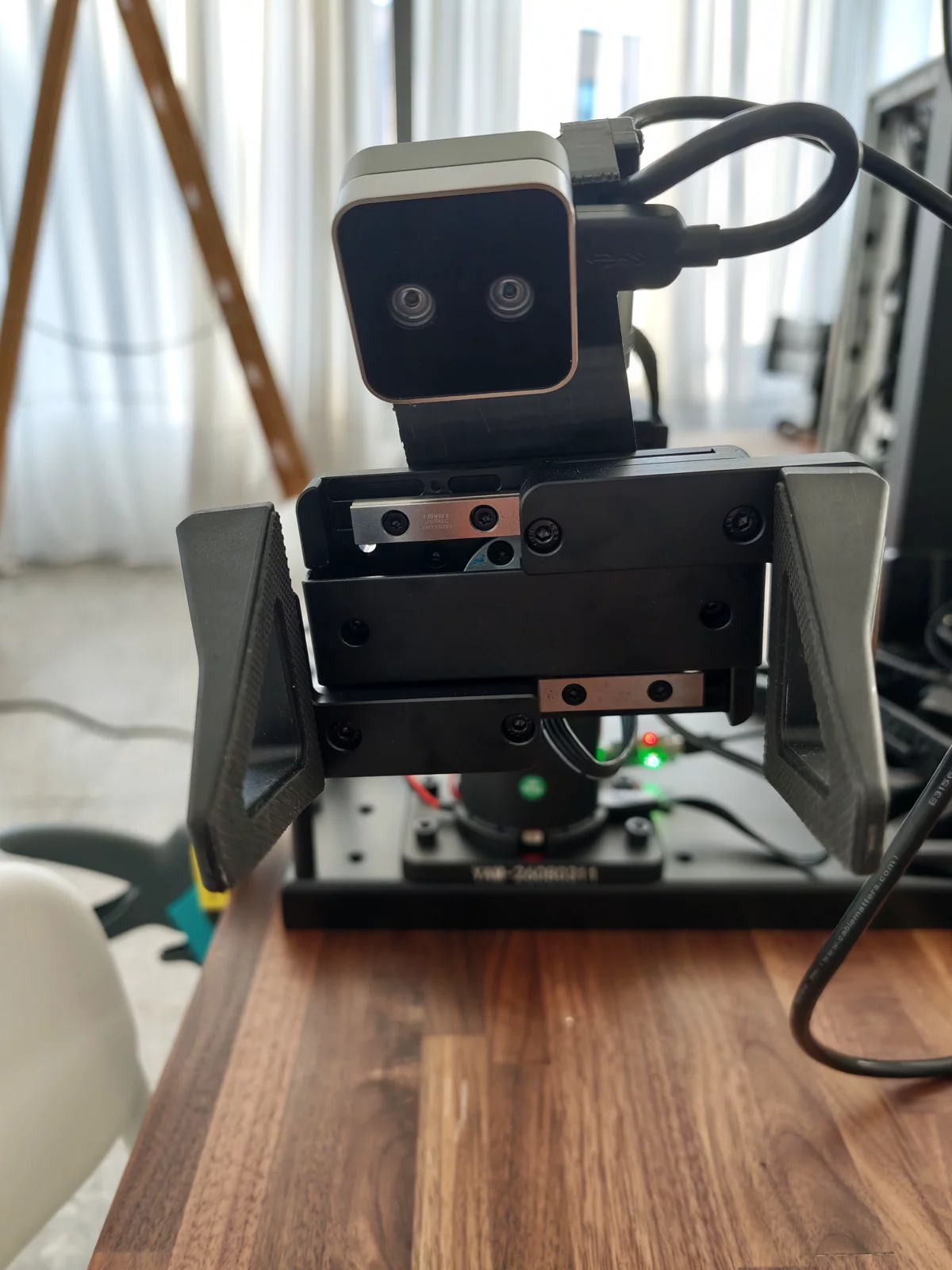
Sergii himself is building a spider-like walking robot and plans to train an AI model in a synthetic environment (simulation) to walk over surfaces with obstacles. The 3D printer is used a lot - levers, mounts, and housings are printed right there.
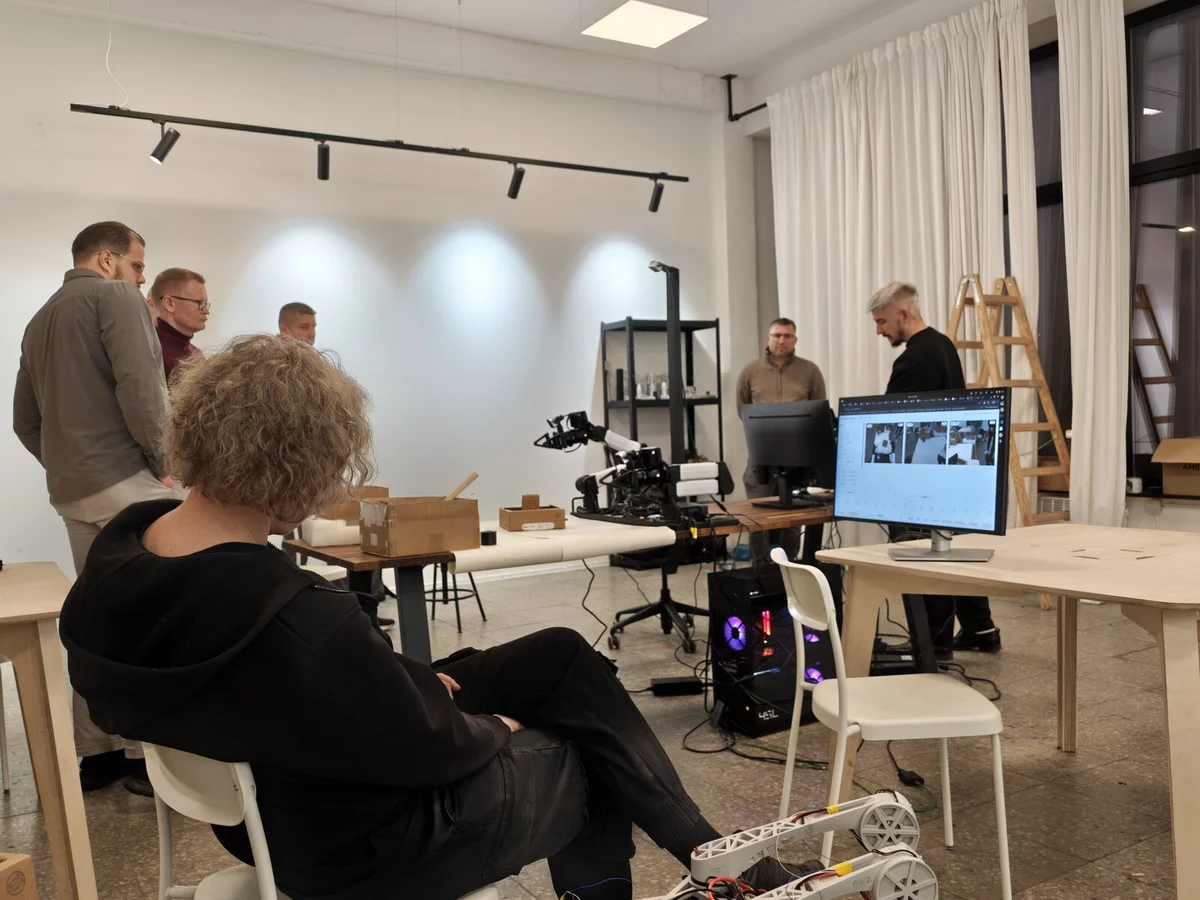
Practice: controlling a motor
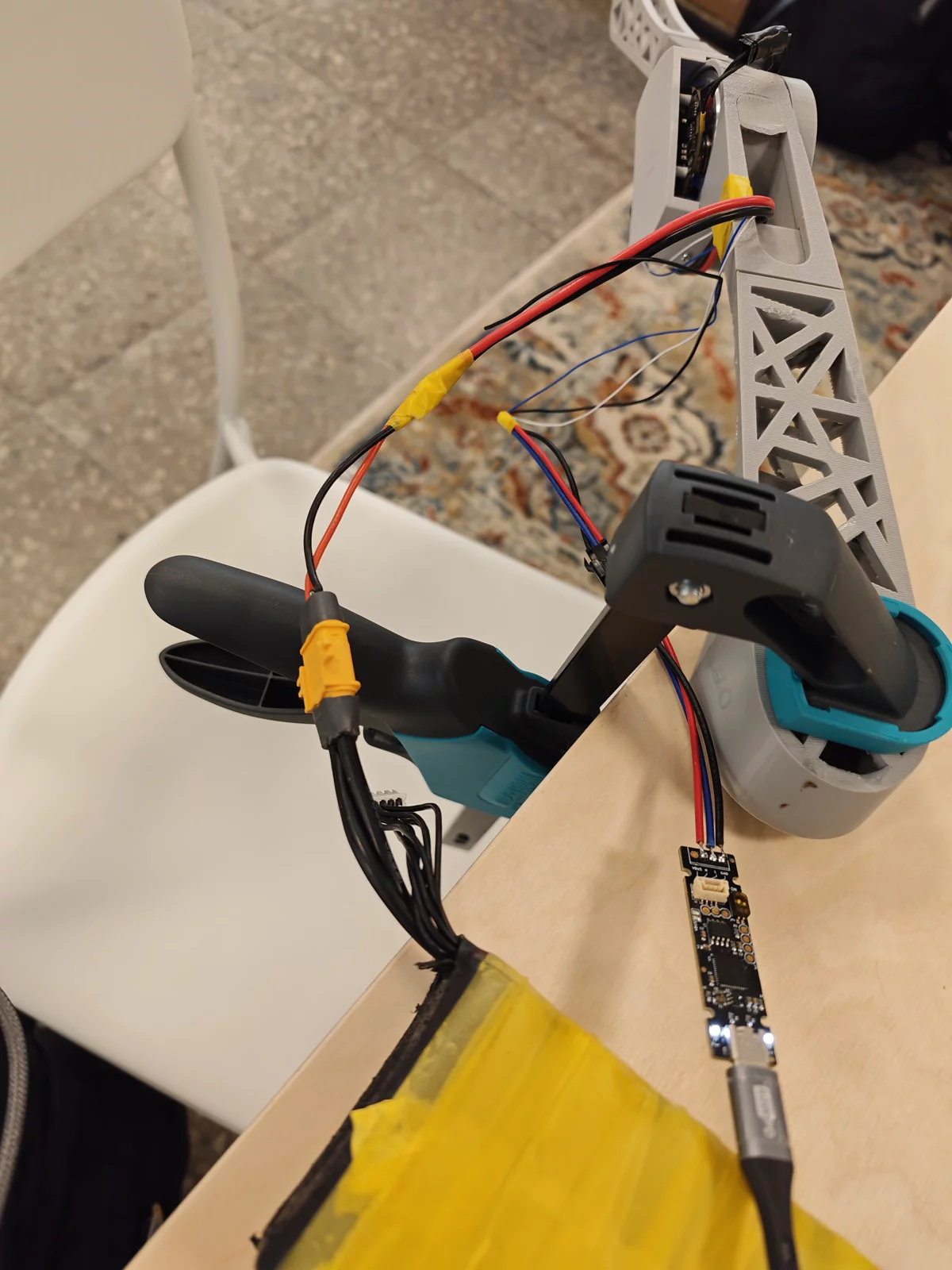
After the theory we split into two teams and tried to control the motors ourselves. I got a CubeMars AKE60-8 with a USB-CAN adapter and a battery. A 3D-printed lever was attached to the motor, so it was basically a small "arm".
In half an hour to an hour I vibe-coded control for this motor using my a2gent.net harness and Claude Opus 5.5: a Python driver for MIT mode over CAN, a CLI, and a web UI with Position / Sine / Gait / Velocity / Torque modes. The code is on GitHub: tot-ra/robotics-motors-workshop.
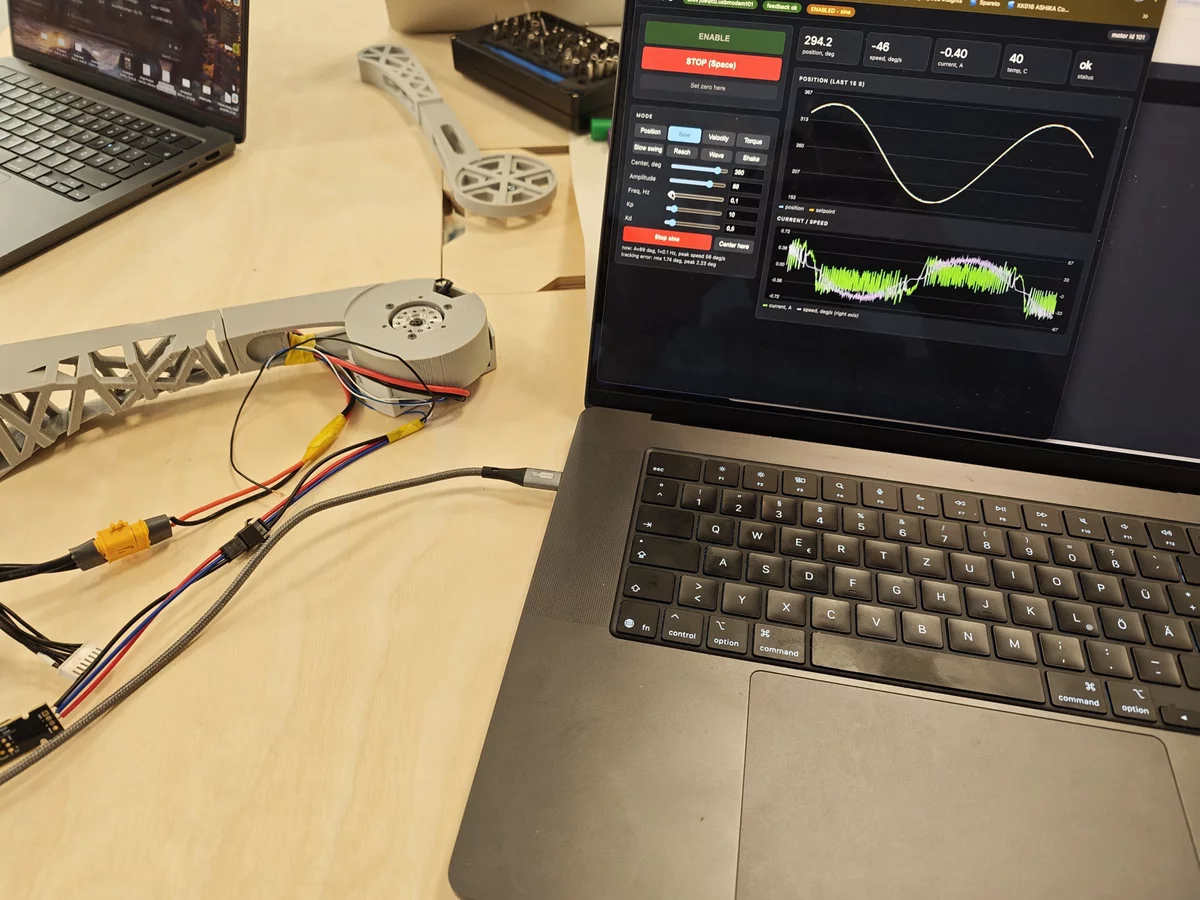
In the end we tried two scenarios:
- simple back-and-forth sine movement with a given amplitude
- a "step" mode: the motor senses resistance (as if a leg touched the ground) and stops moving in that direction
Why I went
Among familiar faces was Margarita, who is building a wheeled assistant robot on a Raspberry Pi. I went to learn how to control stepper motors for the Gratheon robotic beehive - it also needs to move mechanics precisely and reliably, and I need to understand which motor type to pick.
Hopefully the next meetups will cover the compute side - CPU/GPU, Jetson Nano, and other know-how.